Views: 0 Author: Site Editor Publish Time: 2026-09-08 Origin: Site
The debate over denim comfort represents a fundamental trade-off between immediate mobility and long-term structural integrity. Brands, designers, and consumers struggle to balance the instant gratification of elastane blends with the authentic wear patterns, durability, and body-molding properties of 100% cotton. Choosing the wrong fabric leads to poor product reviews, premature garment failure, or high return rates due to sizing and fit issues. You need to know exactly how these materials behave on the cutting table, under the sewing needle, and after fifty wash cycles.
This technical guide deconstructs the material science behind stretch denim vs rigid denim. We evaluate both fabrics across tactile feel, shape retention, and manufacturing viability to help you determine the optimal material for your specific use case. Understanding these mechanics prevents costly production errors and ensures your final garment performs exactly as intended in the field.
Immediate vs. Earned Comfort: Stretch denim provides instant mobility and a soft initial hand-feel, whereas rigid denim requires a dedicated break-in period to mold to the wearer's anatomy.
Structural Integrity: Rigid denim acts as a supportive garment that smooths and holds its shape indefinitely; stretch denim is prone to elastane degradation and "bagging out" over time unless premium recovery yarns are utilized.
Everyday Practicality: Stretch fabrics excel in dynamic daily movements (sitting, bending), while rigid fabrics excel in longevity and developing personalized, high-contrast fade characteristics.
Manufacturing Complexity: Pattern making and grading differ significantly between the two; stretch fabrics require precise negative ease calculations to ensure proper fit.
Strategic Sourcing: Partnering with a specialized custom denim clothing manufacturer is critical to mitigating risks like seam puckering in stretch blends or excessive shrinkage in rigid fabrics.
Traditional rigid denim fabric is constructed entirely from 100% cotton. It contains zero synthetic elastomers. This category heavily features raw or selvedge denim varieties woven on vintage shuttle looms, though modern projectile looms also produce vast quantities of rigid wide-width denim. The fabric relies purely on weave tension, yarn twist, and overall fabric weight to define its physical characteristics. Mills measure this weight in ounces per square yard. Lightweight rigid denim sits around 9 to 11 ounces, mid-weight ranges from 12 to 14 ounces, and heavyweight fabrics push from 15 up to 21 ounces or more. Heavier weights create stiffer, highly durable garments that resist abrasion.
Without synthetic stretch, 100% cotton relies entirely on mechanical stretch. This refers to the natural give inherent in the diagonal twill weave. When you put tension on the fabric, the cotton yarns shift slightly within the weave structure. They do not snap back like rubber. Instead, they relax and hold their new position. This mechanical action allows the fabric to accommodate the wearer over time. The absence of elastane makes the fabric highly resistant to high-temperature washing, heavy industrial laundering, and aggressive stone-washing techniques.
The yarn spinning process also dictates the final character of the rigid fabric. Ring-spun yarns create a slightly uneven, slubby texture that produces beautiful, authentic vertical fading over time. Open-end yarns, which are spun much faster, create a flatter, more uniform surface. Premium rigid denim almost exclusively utilizes ring-spun yarns in both the warp and weft to maximize structural integrity and aesthetic aging.
Modern stretch denim fabric integrates synthetic fibers like elastane, spandex, or Lycra directly into the cotton weave. The synthetic content typically ranges from 1% to 4%. Higher percentages drastically alter the fabric's structural behavior, pushing it closer to activewear than traditional workwear. Mills often utilize complex poly-blends containing cotton, polyester, and elastane. Polyester adds tensile strength to offset the inherently weaker elastane fibers.
To create these fabrics, mills use core-spun yarns. During the spinning process, a continuous filament of elastane is drawn under tension and wrapped in a sheath of cotton fibers. The cotton provides the traditional denim appearance and allows the yarn to absorb indigo dye, while the hidden elastane core provides the elasticity. Advanced mills use dual-core yarns to improve stretch recovery. Dual-core technology wraps both an elastane filament and a polyester filament inside the cotton sheath. The polyester acts as a structural memory wire, forcing the elastane to snap back to its original dimensions after tension is released.
Most stretch mechanics focus on the weft. Weft yarns run horizontally across the fabric roll. Weaving elastane into the weft provides lateral mobility, allowing the garment to expand around the hips, thighs, and knees during movement. Warp stretch, running vertically, remains less common but appears in hyper-stretch athletic fits. Bi-stretch denim incorporates elastane in both directions, offering 360-degree mobility but requiring highly specialized pattern grading to prevent the garment from losing its shape entirely.
The first wear experience highlights the starkest contrast between the two materials. Rigid denim jeans exhibit a stiff, unforgiving initial hand-feel. During the manufacturing process, mills apply heavy starches (sizing) to the warp yarns to prevent them from breaking under the immense tension of the loom. These starches remain embedded in raw denim. The fabric requires physical friction, body heat, and moisture to soften. The wearer must actively break the garment in, which can feel restrictive during the first few weeks of wear.
The break-in process for rigid denim follows a predictable physical progression:
Initial Resistance: The fabric feels abrasive and restricts deep bending or crouching.
Crease Formation: The heavy cotton begins to fold at the natural hinge points of the body, specifically the lap (whiskers) and behind the knees (honeycombs).
Starch Breakdown: Ambient moisture and body heat slowly degrade the sizing agents applied at the mill.
Fiber Relaxation: The cotton yarns physically stretch and settle into their new positions, creating a permanent mechanical memory.
Conversely, stretch jeans offer zero break-in frustration. The synthetic fibers provide an immediate, soft touch. Wearers experience a full range of motion from day one. The fabric easily accommodates dynamic everyday mobility. Bending, crouching, or sitting at a desk for extended periods feels effortless. This initial comfort drives high conversion rates in retail environments because the garment feels perfect the moment it is buttoned in the fitting room.
The tactile experience shifts dramatically over months of consistent wear. Rigid 100% cotton slowly yields to high-stress areas like the knees, seat, and hips. The fibers stretch mechanically and stay stretched. This creates a highly breathable, custom-molded fit completely unique to the wearer's body anatomy. The initial stiffness gives way to a second-skin feel that feels earned and permanent. Because cotton is highly breathable, rigid denim remains comfortable even as it molds closely to the body.
Stretch fabrics maintain a consistent softness but fail to permanently mold. The elastane fibers constantly fight to return to their original shape. Over time, these synthetic fibers break down. Exposure to body oils (sebum), sweat, and washing detergents accelerates this degradation. Lower-tier stretch garments eventually develop a loose, sagging feel. The fabric loses its snap-back capability, resulting in a garment that feels sloppy rather than custom-fitted. The polyurethane core of the elastane simply snaps or loses its elasticity, leaving the cotton sheath unsupported.
Rigid denim possesses immense structural rigidity. It holds the body in rather than merely covering it. The heavy cotton acts as a smoothing layer. It hides unwanted contouring and maintains a crisp, architectural silhouette. Wide-leg, straight, and bootcut styles rely heavily on this drape to hold their intended shape away from the leg. If you attempt to cut a wide-leg trouser from a high-stretch fabric, the material will collapse and drape like a heavy knit, ruining the intended aesthetic.
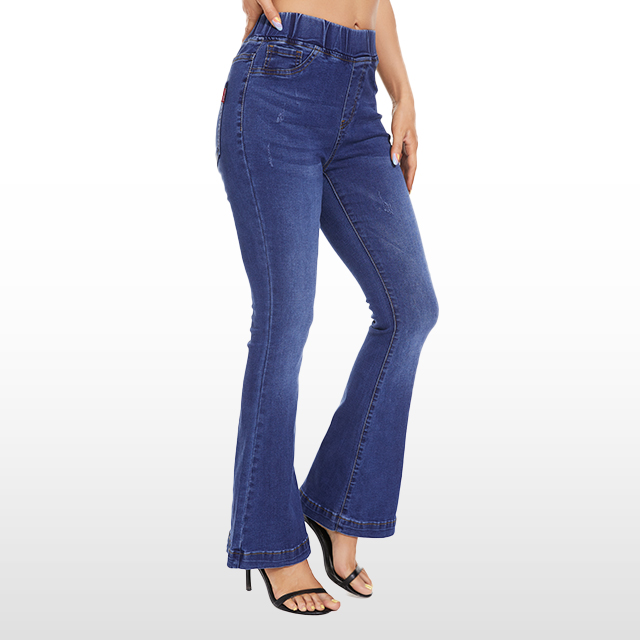
Stretch denim conforms entirely to the body's existing contours. It highlights rather than structures the wearer's shape. This characteristic proves ideal for skinny or slim-tapered cuts where the fabric must sit flush against the skin. However, in poorly graded larger sizes, high-stretch fabrics can prove unflattering. They cling to areas where a rigid fabric would provide clean, straight lines. The lack of structural support means the garment relies entirely on the wearer's body to dictate its shape.
Evaluating stretch recovery metrics remains critical for quality control. Poor-quality stretch denim loses its elasticity rapidly. This leads to the dreaded "bagging out" phenomenon. Knees sag, and waistbands gap after just a few hours of wear. Premium stretch fabrics engineered with high-quality elastane and polyester cores hold their shape exceptionally well. They withstand repeated wear without losing their structural memory, but they still have a finite lifespan compared to pure cotton.
Durability comparisons heavily favor 100% cotton. Rigid fabrics withstand high abrasion, heavy friction, and repeated washing significantly better than elastane blends. Elastane degrades quickly when exposed to high heat. Hot water washes or standard tumble drying will permanently destroy the synthetic fibers. Rigid cotton thrives on rough treatment, often looking and feeling better after years of heavy industrial washing.
Technical Metric | Rigid Denim (100% Cotton) | Stretch Denim (Elastane Blends) |
|---|---|---|
Tensile Strength | Extremely high; resists tearing under heavy load. | Moderate; relies on polyester blends for strength. |
Stretch Recovery | N/A (Relies on mechanical stretch and settling). | Requires >90% recovery rate to prevent sagging. |
Heat Tolerance | Excellent; withstands boiling water and high-heat drying. | Poor; high heat permanently destroys elastane fibers. |
Abrasion Resistance | High; ideal for heavy workwear and industrial use. | Low to Moderate; friction causes elastane breakage. |
Pattern Ease | Standard or positive ease required for mobility. | Negative ease required for proper fit and tension. |
Selecting the right material requires deep collaboration with a reliable denim fabric supplier. Design teams must assess the relationship between fabric weight and stretch percentage. A heavy 14oz denim with 1% stretch behaves entirely differently than a lightweight 9oz denim with 4% stretch. The heavier fabric offers structure with a slight give, while the lighter fabric acts more like activewear.
Understanding shrinkage tolerances is another critical sourcing step. Rigid fabrics, especially unsanforized raw denim, require precise shrinkage calculations. Unsanforized denim can shrink up to 10% after the first wash. Sanforized rigid denim has been pre-shrunk at the mill, reducing shrinkage to around 1% to 3%. Suppliers must provide accurate shrinkage data so pattern makers can adjust the initial cut. Stretch fabrics also shrink, but the elastane content makes the post-wash dimensions harder to predict without rigorous testing. The heat applied during commercial washing causes the elastane to contract, which can drastically alter the garment's measurements.
When sourcing materials, always request the following data points from the mill:
The exact stretch recovery percentage after 30 minutes of extension.
Confirmation of single-core or dual-core yarn technology.
Warp and weft shrinkage tolerances after a standard enzyme wash.
The specific weight of the fabric before and after washing.
A custom denim clothing manufacturer cannot use the same pattern for both fabrics. Pattern grading differs drastically. Stretch requires negative ease. The manufacturer must cut the garment smaller than the actual body measurements. The fabric stretches to fit the wearer. Rigid patterns require standard or positive ease, allowing physical room for the body to move within the garment.
The cutting room must handle stretch fabrics differently. Rolls of stretch denim must be unrolled and allowed to relax on the cutting table for 24 to 48 hours before the blade touches them. If cut immediately off the roll, the tension releases, and the cut panels will shrink before they even reach the sewing floor. Rigid denim does not require this relaxation period and can be cut immediately.
Construction defects present higher risks with stretch blends. High-stretch fabrics suffer from seam slippage and puckering during sewing. The sewing machine needle can also cut the brittle elastane fibers, causing localized fabric failure. Factories must use specialized ballpoint needles to separate the yarns rather than pierce them. Hardware integration requires special attention. Rivets and heavy-duty metal buttons easily tear through lightweight stretch fabrics. Manufacturers must apply reinforced backing fabrics (interlining) behind all hardware to prevent structural blowouts.
Choosing between these two distinct materials dictates the entire product lifecycle. The decision impacts pattern drafting, factory selection, marketing language, and consumer care instructions. Use the following framework to align your fabric choice with your specific product goals.
Specify 100% cotton when targeting denim purists, heritage collections, or premium raw and selvedge lines. This demographic expects and appreciates the break-in process. Rigid fabrics are mandatory when designing relaxed, straight, wide-leg, or traditional workwear silhouettes. These cuts require structural drape to hang correctly from the hips down to the hem.
Prioritize rigid materials when extreme durability is the primary selling point. Workwear brands rely on heavy cotton to prevent blowouts and abrasions on job sites. Additionally, rigid fabrics produce the most authentic, high-contrast fade patterns. The stiff ridges of the fabric catch the indigo dye during the washing process, creating sharp whiskers at the hips and distinct honeycombs behind the knees over time.
Specify elastane blends when targeting mass-market consumers. This demographic prioritizes immediate comfort, everyday practicality, and active lifestyles. They will not tolerate a multi-week break-in period. Stretch is absolutely necessary when designing skinny, slim, or heavily tapered silhouettes. Without elastane, these tight cuts would severely restrict basic human mobility and cause seam blowouts at the knees and seat.
Develop stretch lines for specific functional use cases. Maternity wear requires high elasticity to accommodate changing body shapes. Adaptive clothing lines benefit from the ease of dressing provided by stretch fabrics. Garments meant for long periods of seated wear, such as office attire or travel clothing, require the lateral give that only synthetic blends can provide.
Request technical specification sheets and shrinkage data from your fabric suppliers before finalizing any designs or tech packs.
Conduct rigorous wear-testing on stretch samples to measure recovery rates over a 48-hour period to ensure the fabric does not bag out.
Consult with an experienced manufacturing partner to adjust your patterns, ensuring the grading incorporates the correct negative ease for your chosen elasticity.
Update your garment care labels to explicitly warn consumers against using high-heat tumble dryers on elastane blends to prolong the lifespan of the garment.
A: Yes, through mechanical stretch. While it lacks elastane, 100% cotton naturally relaxes and stretches up to an inch in high-tension areas like the waist, hips, and knees. The yarns shift and settle as the fabric breaks in, creating a custom fit that retains its new shape without snapping back.
A: For a balance of comfort and durability, 1% to 2% elastane is the industry standard. Anything above 3% often results in a highly elastic feel that highlights unwanted body contours and significantly increases the risk of the fabric losing its shape prematurely after repeated wear.
A: They can feel stiff and restrictive during the first few wears. They lack the immediate give needed for deep bending or crouching. However, body heat, friction, and movement quickly soften the heavy cotton fibers, leading to a highly comfortable, personalized fit that conforms to your specific anatomy.
A: Avoid high heat entirely. Wash stretch garments in cold water and hang them to dry. The heat from tumble dryers breaks down the synthetic elastane fibers, causing permanent sagging. Investing in premium fabrics with high stretch-recovery ratings and dual-core yarns also mitigates this issue.
A: No. Stretch materials require patterns drafted with negative ease to account for the fabric's elasticity, meaning the garment is cut smaller than the body. Rigid patterns are drafted with standard or positive ease. Using a rigid pattern for stretch fabric results in an oversized, ill-fitting garment.