Views: 0 Author: Site Editor Publish Time: 2026-09-01 Origin: Site
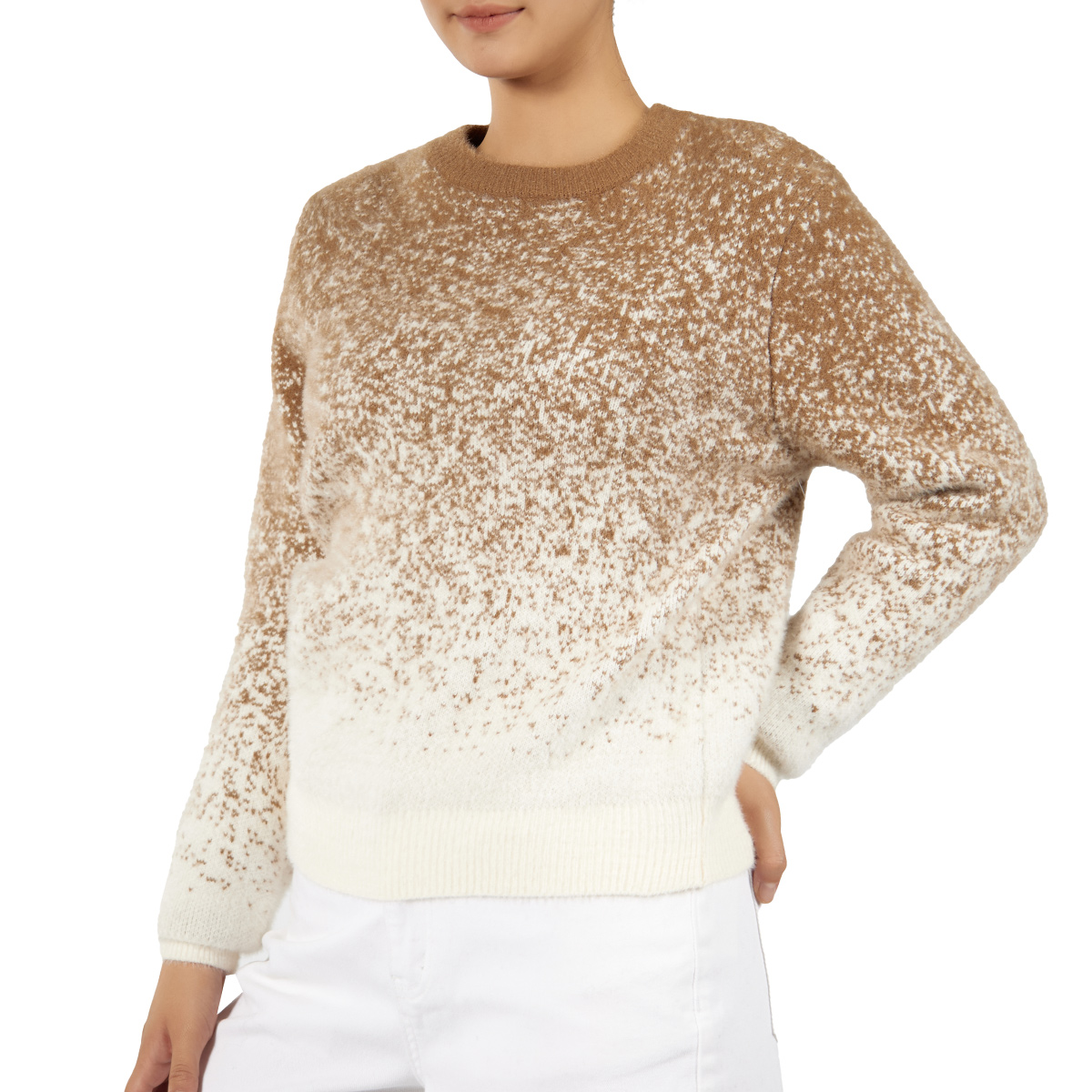
Scaling a gradient color sweater from a single approved prototype to a full commercial production run introduces severe technical vulnerabilities. The primary challenge lies in maintaining color transition consistency across different garment panels and sizes. Brands frequently face high defect rates when factories fail to mathematically align the gradient rate of change on sleeves with the main body. This misalignment results in mismatched, unsellable inventory.
Mitigating these risks requires partnering with a reliable custom sweater manufacturer. They must utilize precise yarn-dyeing calculations, advanced knitting technology, and strict quality control protocols. This guide provides a framework for evaluating manufacturing partners, selecting appropriate yarn thicknesses, and structuring bulk orders for complex color matching knitwear.
Transition Mathematics: Flawless gradient execution requires precise calculation of color shifts across different panel widths (e.g., sleeves vs. body) to ensure horizontal alignment at the seams.
Yarn Thickness & Skein Matching: The specific thickness of the spun yarn dictates the smoothness of the gradient, requiring manufacturers to calculate exact "sweater quantities" per unit to match transitions across multiple skeins.
Manufacturing Methodology: The choice between dip-dyeing, space-dyed yarn, and multi-feed knitting dictates the visual outcome, cost-per-unit, and Minimum Order Quantity (MOQ).
Size Grading Risks: A gradient that looks perfect on a size Small will stretch or compress on an XL unless the manufacturer adjusts the color transition rate per size.
Vendor Evaluation: Reliable bulk sweater production relies on stable workmanship, strict tolerance limits for yarn lot variations, and documented wash-testing for colorfastness.
Defining a commercially acceptable gradient requires strict visual standards on the factory floor. Success demands a continuous colormap without harsh, unintended banding. The garment must maintain visual symmetry across all sizes. A failed gradient shows abrupt color jumps or mismatched horizontal lines at the armhole seams. Quality control teams look for smooth visual flow from the hem to the shoulder. Any deviation from the approved transition rate flags the garment as defective.
The reality of flat knitting adds complexity. When a sweater panel comes off the knitting machine, the stitches remain tight and distorted. The true gradient only reveals itself after the panel undergoes steam blocking and washing. If the production engineer calculates the color transition based solely on raw machine rows without accounting for yarn relaxation and shrinkage, the gradient will shift out of alignment during the finishing process. Success requires calculating the transition based on the final, blocked gauge of the fabric.
Choosing multiple colors for a gradient project involves specific technical tricks related to dye chemistry and visual blending. Analogous colors sit next to each other on the color wheel. They blend smoothly during the transition phases. Examples include navy fading into royal blue, or rust fading into gold. These combinations require less complex marling to look natural.
Complementary colors sit opposite each other. Blending red into green or yellow into purple risks creating muddy, brown mid-tones where the two colors intersect. Designers must select transition shades carefully to bridge contrasting colors without losing saturation. If a brand wants a high-contrast fade, the factory must introduce a neutral bridge color—like a pale grey or cream—into the middle of the gradient sequence to prevent the yarns from visually canceling each other out.
Structural differences define these two styles on the knitting machine. A color block sweater relies on distinct intarsia or jacquard paneling. Factories use stock solid yarns to knit these separate color areas. True gradients require blending techniques like marl knitting, plating, or specialized yarn dyeing. Failure points differ drastically between the two methods.
Construction Type | Knitting Technique | Primary Failure Point | Yarn Calculation Method |
|---|---|---|---|
Color Block | Intarsia / Jacquard | Seam tension and yarn tails at color joints | Standard weight-based consumption |
True Gradient | Multi-end Marling / Plating | Transition timing and horizontal alignment | Engineered length-based consumption |
Space-Dyed Gradient | Standard Jersey / Rib | Pattern pooling and irregular color repeats | Strict cone-matching per panel |
The geometry of knitting complicates gradient alignment. Sleeves have fewer stitches per row than the main body panel. A standard body panel might require 120 needles across the machine bed. A sleeve cuff might start at 40 needles and gradually increase to 90 needles at the bicep. If you feed the exact same gradient yarn at the same rate into both panels, the sleeve gradient elongates. It will fail to match the torso horizontally.
Manufacturers must calculate specific colorway transitions to fix this mathematical discrepancy. They engineer targeted yarn skeins specifically for sleeves. If using a space-dyed yarn, the dye repeat on the sleeve cones must be shorter than the dye repeat on the body cones. If using a marling technique, the machine programmer must write a separate code for the sleeves, forcing the color carriers to swap yarns at a faster vertical rate. This forces alignment and ensures the rate of color change matches perfectly at the armholes.
Spinning a specific thickness impacts the visual gradient. Yarn weight dictates how quickly a color transitions visually across the knitted surface. Fine-gauge yarns allow for micro-transitions. This works perfectly for a delicate women's knit pullover knitted on a 12-gauge or 14-gauge machine. The high number of rows per inch allows the factory to stretch a color fade over hundreds of courses, creating a smooth, watercolor effect.
Chunky yarns result in faster, more stepped color shifts. A 3-gauge chunky knit has very few rows per inch. If you attempt a complex five-color fade on a chunky sweater, you might only have ten rows to execute each color transition. This creates obvious, blocky color bands rather than a smooth fade. You must match the yarn thickness and machine gauge to your desired visual outcome during the initial tech pack development.
Assessing factory capabilities depends on their primary method for achieving color transitions. Each method carries specific production realities, machinery requirements, and risk profiles.
Space-Dyed Yarn: Spinners pre-dye the yarn with calculated color shifts along the hank. This offers high consistency across the production run. It requires high MOQs from yarn spinners because they must program the dye vats for specific lengths. The factory must carefully wind the yarn onto cones, ensuring every cone starts at the exact same point in the color repeat.
Dip-Dyeing (Garment Dyeing): The factory knits the garment in a solid base color. Workers then suspend the finished garments over dye baths, lowering them mechanically to create a fade. This allows for a lower MOQ. However, it carries a higher risk of inconsistent transition lines and color bleeding due to capillary action pulling the dye up into the fibers unpredictably.
Multi-End Marling: The machine knits multiple thin strands of yarn simultaneously. It swaps colors one strand at a time to create a visual gradient. This works best for fine-gauge knitwear requiring subtle transitions without custom yarn dyeing. It requires advanced machine programming and multiple yarn carriers operating flawlessly.
Evaluate the factory's ability to calculate exact yarn consumption per garment. A gradient sweater requires precise math. The manufacturer must determine color transitions across individual yarn cones. They must match these transitions across multiple skeins.
If a yarn breaks during knitting and the operator simply ties a knot to a new cone without checking the color sequence, the gradient is ruined. The factory must implement strict "sweater quantity" protocols. This means winding specific weights of yarn onto individual cones designated for a single garment. Ask the factory how they handle yarn waste when aligning the start of a new cone with a specific color block. High-quality manufacturers accept a higher yarn waste percentage to guarantee perfect color alignment.
Modern gradient designs require computerized flat knitting machines. Brands like Shima Seiki or Stoll provide precise stitch-by-stitch color control. Manual hand-flat machines cannot execute complex marling programs consistently across a bulk order.
Identify the software capabilities of the factory. Advanced programming software, such as Shima Seiki's APEX system, simulates gradients on a screen before physical sampling begins. The programmer inputs the exact yarn thickness, colors, and machine gauge. The software generates a 3D rendering of the gradient, highlighting any potential banding or alignment issues at the seams. This saves weeks of development time and reduces yarn waste during the prototyping phase.
Grading a gradient from a sample size Medium to a full size run requires mathematical adjustments. A size XS body panel is significantly shorter than an XXL panel. If the factory uses a one-size-fits-all yarn feed or the exact same marling program for all sizes, the gradient will compress on smaller sizes. It will stretch and look diluted on larger sizes.
The tech pack must specify proportional color scaling. The gradient must start and end at the same anatomical points across all sizes. For example, if the color transition from blue to white happens exactly at the waistline on a size Medium, it must also happen exactly at the waistline on the XXL. The factory must adjust the transition rate and row counts per size to maintain visual consistency.
Define mandatory sampling stages to protect your bulk order. Skipping these steps leads to catastrophic bulk rejections.
Lab Dips: Approve the base chemical dye formulas on small yarn swatches to ensure the colors match your Pantone standards under D65 lighting.
Strike-offs: For space-dyed yarns, approve a single hank of yarn to verify the length and sequence of the color repeat.
Knit downs: Approve the knitting tension and the physical color transition rate on a 20cm x 20cm swatch. This verifies the machine programming.
Fully fashioned prototypes: Review the assembled garment in the base sample size to check armhole alignment and overall drape.
Size run prototypes: Demand a physical sample of the smallest and largest sizes to verify proportional grading and transition scaling.
Establish strict criteria for signing off on pre-production (PP) samples. Focus specifically on gradient alignment at the side seams and armholes. Once the PP sample is approved, it becomes the binding legal standard for the bulk production run.
The chosen gradient method directly impacts labor time, machine time, and yarn waste. Marling runs slower on the knitting machine because the carriers must constantly swap yarn ends and move out of the knitting zone. This increases machine time, which directly raises the cost per unit. Space-dyeing requires custom yarn spinning. You pay for the engineering of the yarn before knitting even begins, adding upfront development costs.
Dip-dyeing adds a secondary manual labor process after knitting. Workers must physically handle wet garments, monitor dye baths, and manage extensive washing and drying cycles. Evaluate these manufacturing trade-offs against your target retail margin. A complex marled gradient on a 14-gauge machine will always cost more in machine minutes than a simple dip-dye on a 7-gauge blank.
Gradient designs often trigger higher MOQs. Custom yarn dyeing requires large vats to maintain chemical stability and pressure. Spinners usually demand hundreds of kilograms per colorway. If your order only requires 50kg of yarn, you will likely face steep surcharges to run a sub-minimum dye vat.
You can negotiate custom OEM options to navigate this. Consolidate base yarn colors across different styles. Use the same custom gradient yarn in a sweater, a scarf, and a beanie to meet the spinner's minimum weight requirements. Alternatively, design the gradient to use stock solid colors for the top and bottom blocks, only utilizing custom-dyed yarn for the transition rows to reduce the total custom yarn weight required.
Map out the extended timeline required for custom gradient yarn development. Stock solid yarns ship to the factory in days. Custom space-dyed yarns take weeks to engineer, dye, and spin. Factor in an additional 30 to 45 days for yarn development before bulk knitting can commence.
Lab dips alone can take two weeks of back-and-forth shipping. If the first strike-off fails visual inspection, you lose another two weeks. Supply chain predictability relies on buffering this timeline accurately. Never assume a gradient sweater will follow the same critical path as a solid-color basic.
Factory floor inconsistencies ruin bulk sweater production. Workers might load yarn cones incorrectly, causing the gradient to run backward. They might mix up sleeve cones with body cones. Mandate standardized operating procedures.
Place visual reference guides at every knitting station. Set acceptable tolerances for color shifts using spectrophotometers. Use standardized D65 lighting boxes to evaluate color consistency across different production batches. Quality control inspectors must measure the exact distance from the hem to the start of the color transition on every tenth garment coming off the line.
Different dye lots yield slightly different shades. This ruins the continuous colormap effect. A slight shift in the mid-tone breaks the visual illusion of a fade. If the factory runs out of yarn halfway through production and dyes a second batch, the chemical uptake will vary slightly based on ambient humidity and water temperature.
Mandate that the manufacturer dyes the entire yarn quantity for the bulk order in a single master batch. Do not allow them to split the dyeing process across multiple weeks or different dye houses. Store the master batch in a climate-controlled warehouse to prevent UV degradation before knitting.
Dip-dyed and heavily saturated gradient yarns carry high bleeding risks. The darker end of the gradient can bleed into the lighter end during consumer laundering, ruining the garment after one wash. This happens frequently when mixing reactive dyes on cotton with improper washing protocols.
Enforce strict wash-testing standards. Use ISO 105-C06 protocols to test colorfastness. Require the factory to apply chemical fixatives during the final washing stage. These fixatives lock the dye molecules into the fibers. Demand a third-party lab test report confirming the colorfastness rating before authorizing the final shipment.
Visible banding occurs when a color transition is too abrupt. This happens frequently in fine-gauge knits if the marling sequence is poorly programmed. The eye easily detects harsh horizontal lines where one color stops and another begins.
Address this risk directly in the tech pack. Specify the exact number of rows over which a color transition must occur. Force the factory to stretch the transition phase over a larger surface area. Use dithering patterns in the machine code to randomly swap stitches between the two colors, blurring the lines and creating a seamless visual fade.
Successfully producing a gradient sweater at scale is a labor-intensive, highly technical endeavor. It requires moving beyond basic cut-and-sew operations to specialized knitwear engineers. Prioritize manufacturers who demonstrate mathematical grading across sizes and enforce strict dye-lot controls.
Request previous gradient knit-downs from potential factory partners to verify their technical execution and machine capabilities.
Submit a detailed tech pack specifying transition rows, yarn thickness, and anatomical alignment points for every size in the run.
Demand a multi-size prototype run to verify proportional color scaling before committing to bulk production.
Mandate single master-batch dyeing to eliminate yarn lot variations across the order.
Require third-party ISO wash testing to guarantee colorfastness and prevent dye bleeding.
A: Manufacturers calculate different transition rates based on stitch counts and panel widths. Because a sleeve has fewer stitches than the main body, feeding the yarn at the same rate stretches the sleeve gradient vertically. Factories engineer specific yarn cones or adjust the machine's feed rate to force horizontal alignment at the armholes.
A: A color block sweater uses distinct intarsia or jacquard panels with stock solid yarns. Gradients require custom space-dyed yarn, dip-dyeing, or complex multi-end marling techniques to create a continuous colormap. This significantly increases MOQs, extends lead times, and requires advanced machine programming.
A: Yarn thickness dictates the visual smoothness of the transition. Finer yarns allow for subtle, row-by-row color blending, creating a seamless fade. Thicker, chunky yarns cover more surface area per stitch, resulting in faster, more noticeable color shifts and visible banding.
A: True gradients often rely on custom space-dyed yarns. Yarn spinners require large minimum weights to operate their dye vats efficiently and maintain chemical stability. You cannot use off-the-shelf stock yarn for a precise, engineered gradient, which forces brands to meet the spinner's bulk requirements.
A: Brands must enforce strict ISO wash-testing standards before approving bulk production. Factories must use high-quality reactive dyes and apply chemical fixatives during the final garment washing stage. This locks the dye molecules into the fibers, preventing the dark end from bleeding into the light end.
A: Multi-end marling involves feeding multiple thin strands of yarn into the knitting machine simultaneously. To create a gradient, the machine drops one strand of the starting color and replaces it with a strand of the target color. It repeats this process strand by strand to create a blended visual fade.